As we delve into the profound influence of Catholicism during the Middle Ages, consider how these historical insights can shape our contemporary faith practice. What lessons can we draw from this rich tapestry of history that remains relevant today?
What You Will Learn
- The pivotal role of the Church as a central authority in both spiritual and temporal matters during the Middle Ages.
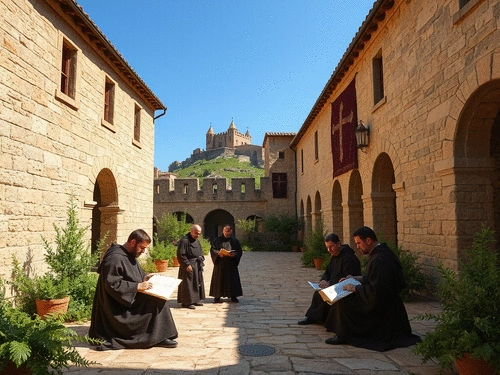
- How monasticism fostered centers of learning and preserved theological texts that shaped Catholic doctrine.
- The impact of the Crusades on the Church’s mission and the complexities of faith in action.
- The significance of community building and moral guidance provided by the Church in medieval society.
- Key figures like St. Benedict and St. Francis of Assisi and their enduring teachings on community and compassion.
- The integration of faith and reason through scholasticism, which led to the establishment of early universities.
- The importance of pilgrimages and relics in enhancing personal faith and community connection.
Key Characteristics & Lessons from Medieval Catholicism
The Middle Ages profoundly shaped Catholic faith and practice. Below, we highlight key defining characteristics and their enduring lessons for today.
Church Authority: Spiritual & Temporal
The Pope's significant influence on monarchs and political decisions, intertwining religious and governmental power.
Modern Lesson:
Engage responsibly with the world's challenges, guided by faith.
Monastic Life: Centers of Learning
Monasteries preserved theological texts and traditions, fostering deep faith understanding and education.
Modern Lesson:
Seek understanding of faith through continuous study and discussion.
Crusades: Faith in Conflict
Religious wars aiming to reclaim sacred lands and spread Christianity, highlighting faith's complexities.
Modern Lesson:
Uphold beliefs with courage, recognizing faith may call for bold actions.
Scholasticism: Faith & Reason
The merging of faith and reason, leading to the establishment of universities and critical thinking.
Modern Lesson:
Integrate faith with reason and critical thinking in spiritual practice.
Understanding Catholicism in the Middle Ages: A Historical Context
Exploring the history of Catholicism during the Middle Ages unveils a rich tapestry of faith, culture, and societal structure. This era, spanning roughly from the 5th to the late 15th century, was crucial in shaping the Catholic Church as we know it today. At What Catholics Believe, we aim to illuminate these pivotal moments, helping you grasp how they influence our faith and practices even now.
Key characteristics of this period include the intertwining of religious authority with political power, the emergence of monastic life, and the ongoing efforts to define and defend Catholic doctrine. Understanding these aspects can help us appreciate the foundational role that the Church played during this transformative time.
Defining the Era of Catholicism: Key Characteristics
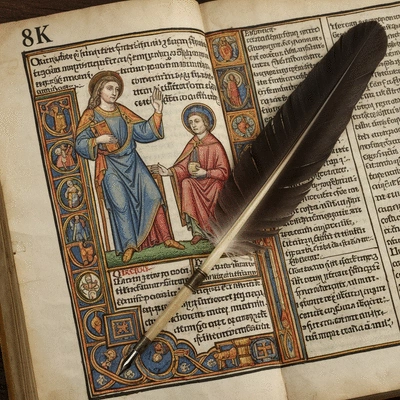
The Middle Ages were marked by several key characteristics that defined Catholicism. First and foremost, the Church became a central authority in both spiritual and temporal matters, leading to a close relationship between religion and governance. Additionally, the rise of monasticism created centers of learning and spirituality, fostering a deeper understanding of faith.
- Church Authority: The Pope held significant power, often influencing monarchs and political decisions.
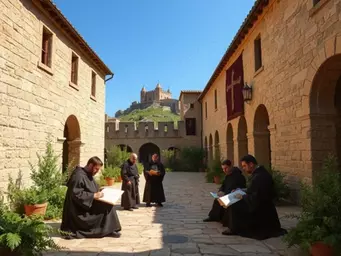
- Monastic Life: Monasteries served as strongholds of faith and education, preserving theological texts and traditions.
- Crusades: These religious wars were fueled by a desire to reclaim sacred lands and spread Christianity.
- Scholasticism: The merging of faith and reason became prominent, leading to the establishment of universities.
These characteristics played a crucial role in the development of the Catholic Church and its teachings, laying the groundwork for future advancements in theology and religious practice.
Importance of Catholicism in Shaping Medieval Society
Catholicism significantly shaped medieval society, acting as a unifying force in a fragmented world. The Church provided moral guidance, social services, and a sense of community among the faithful. Its influence extended beyond spiritual matters, impacting education, art, and even politics.
- Community Building: The Church fostered a sense of belonging, uniting people under shared beliefs.
- Education: Monasteries and later universities became centers for learning, producing theologians and scholars.
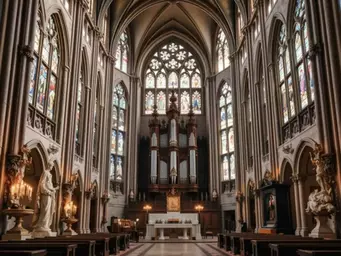
- Art and Architecture: The Church commissioned countless works that reflected its grandeur, often depicting biblical narratives.
As we reflect on this era, we recognize that Catholicism was not just a religion but a vital component of daily life, influencing everything from governance to personal relationships. Indeed, the Catholic Church profoundly shaped the foundational structures of medieval society.
Key Figures of Catholicism: St. Benedict and St. Francis of Assisi
The Middle Ages were characterized by influential figures who shaped Catholic thought and practice. St. Benedict and St. Francis of Assisi are two such pivotal figures whose legacies continue to inspire us today. St. Benedict's Rule laid the groundwork for monastic life, emphasizing community, prayer, and work.
- St. Benedict: Founder of the Benedictine monasteries, his Rule became the foundation for Western monasticism.
- St. Francis: Known for his love of creation and commitment to poverty, he highlighted the importance of living out one's faith.
- Legacy: Both saints' teachings encourage us to live with compassion, humility, and a genuine love for others.
By studying their lives and teachings, we can draw important lessons that still resonate with our contemporary understanding of faith and community at What Catholics Believe. Their stories remind us that the heart of Catholicism lies not just in doctrine but in the way we embody our faith in everyday life.
Interactive Poll: Your Thoughts Matter!
As we delve deeper into the impact of Catholicism during the Middle Ages, we’d love to hear your thoughts! How do you believe the teachings and practices from this era influence your faith today?
Lessons from Catholicism in the Middle Ages
The Middle Ages was a period of profound influence for the Catholic Church, shaping the faith and practices we engage with today. Examining the legacy of monasticism, the Crusades, and scholasticism reveals not just historical facts but also valuable lessons that resonate in our faith journey. As we reflect on these aspects, we uncover the enduring impacts they have on modern Catholicism.
Monasticism taught us the importance of community and dedication to God, while the Crusades highlighted the complexities of faith in action. Scholasticism provided a framework for merging faith and reason, an approach still relevant as we seek understanding in our contemporary world. Let's dive deeper into each of these themes to see what they can teach us today!
Reflecting on the Legacy of Monasticism, Crusades, and Scholasticism
- Monasticism: Emphasized the value of community and prayerful living.
- Crusades: Showcased the challenges of faith in times of conflict.
- Scholasticism: Encouraged the integration of faith with reason and critical thinking.
These elements remind us that Catholicism is not just a set of beliefs but a way of life that requires engagement and reflection. For instance, the dedication of monks to preserving knowledge during the Middle Ages serves as a call for us today to value education and continuous learning in our spiritual practice. As we explore these legacies, we realize they are not relics of the past but living traditions that guide our faith journey.

Understanding Modern Implications of Medieval Catholicism
As we reflect on how medieval Catholicism influences our lives today, we can identify several key implications. The commitment to education fostered by monastic communities encourages us to seek knowledge of our faith actively. Additionally, the fervor of the Crusades serves as a reminder that our faith calls us to engage with the world responsibly and compassionately.
- Encouragement to educate: We should seek understanding of our faith through study and discussion.
- Responsibility in action: Faith requires us to respond to the world's challenges with compassion.
- Courage in belief: Upholding our beliefs may sometimes call for bold actions.
These modern implications show that the lessons from the Middle Ages are not just historical anecdotes; they are guiding principles for our daily lives as Catholics. By embracing these teachings, we enhance our understanding and practice of the faith, making it relevant in today’s fast-paced world. This historical period also laid the foundations for the development of modern science, demonstrating the Church's ongoing commitment to intellectual pursuits.
The Role of Pilgrimages and Relics in Shaping Faith Practices
Pilgrimages and the veneration of relics have played a vital role in Catholic devotion since the Middle Ages. These practices invite us to embark on journeys of faith, often leading to spiritual renewal. Pilgrimages to holy sites serve as a profound reminder of our connection to the broader Church and its history, as well as a way to deepen our relationship with God.
- Spiritual journeys: Pilgrimages encourage physical and spiritual exploration.
- Historical connection: Relics connect us to the saints and the rich heritage of our faith.
- Community involvement: Participating in these practices fosters a sense of belonging within the Church.
Through these meaningful practices, we can draw closer to God while connecting with fellow believers. Embracing the lessons of the past, such as the importance of pilgrimage, allows us to experience our faith in a vibrant and personal way.
Frequently Asked Questions About Catholicism in the Middle Ages
Recap of Key Points
Here is a quick recap of the important points discussed in the article:
- Church Authority: The Pope wielded significant influence over both spiritual and political matters.
- Monastic Life: Monasteries became centers for education and preservation of theological texts.
- Crusades: These campaigns aimed to reclaim holy lands and spread Christianity.
- Scholasticism: The integration of faith and reason paved the way for modern educational institutions.
- Community Building: The Church fostered a sense of belonging among the faithful.
- Education and Art: The Church played a vital role in advancing learning and commissioning significant works of art.
- Legacy of Saints: Figures like St. Benedict and St. Francis shaped Catholic practices and teachings.
- Modern Implications: Lessons from this era continue to guide contemporary Catholic practice and engagement.